
Recently, I experienced a mild depressive episode, probably linked to the fatigue of moving and various other existential troubles; nothing serious, but we don't only get depressed about serious things. As a therapist, I clearly saw the warning signs coming: sudden bursts of exaggerated sadness, a desire to complain, fatigue from the moment I woke up, a bleak outlook on life, and the feeling that nothing could get better, neither me nor my troubles.
Two other signs worried me: on the one hand, my body was starting to stop obeying me, often slowed down, often prostrate, any idea of moving or acting didn't reach my muscles, except with a major effort on my part; on the other hand, a desire to give up, to let myself slide.
That's when I realized things could get out of hand. I have a history of depression in my family, and I felt my depressive genes were waking up and starting their dirty work of destruction.
So, I started with simple efforts: walking every day in the woods near my home, never missing a single meditation session, performing simple and easy tasks (tidying up, cooking), seeking out the company of people who are doing well, fighting to push back and defuse negative thoughts and scenarios, making an effort to smile to myself and constantly repeating "it's going to be okay, it's going to be okay." Nothing too complicated, but I maintained it over time.
It might not have been enough; I would then have had to consider antidepressants or help from a colleague. But it worked. In a few days, I didn't feel better, but I realized I was stopping getting worse. Then, for a few weeks, came a period of fragility: I was keeping my head above water, but any setback, big or small, would restart the depressive engine. Finally, after months, a gradual return of peace of mind. By the time you read these lines, this story will probably be a thing of the past.
So, why am I telling you all this? Because it seems to me that it does us humans good when our fellow humans tell us how they fight their difficulties. And because it's better to remind ourselves how fragile we are, and therefore how important it is to nurture our happiness, which is a barrier (not a guarantee) against depression.
And then, because every adversity leaves us a legacy (I would have preferred to do without the legacy and avoid the adversity, but we don't choose!), I retained from this episode this phrase from the writer Frédéric Pajak:
"We are what we can be, far more than what we want to be."
When the winds are against you, you do what you can, not what you want; but that little bit, you absolutely must do, in order not to sink…
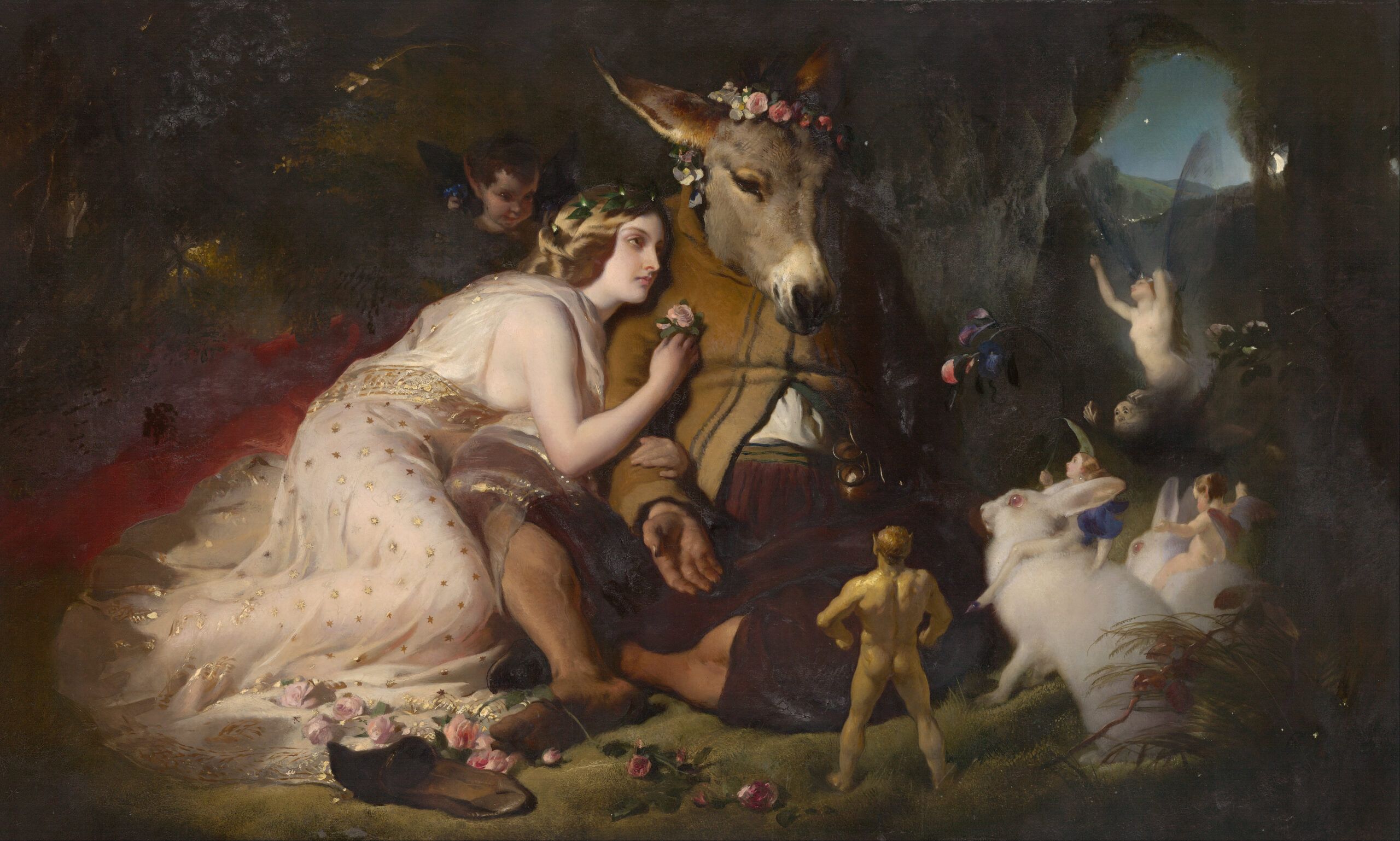
Illustration: A donkey also suffering from a bit of a bout of depression, but well consoled and distracted… (The Fairy Queen Titania and the Donkey Bottom, by Edwin Landseer, 1848-1851, National Gallery of Victoria, Australia).
PS : cette chronique a été publiée à l’origine dans Psychologies Magazine en novembre 2024.